The barbed-spring padlock
The tomb of China’s first emperor contains more than 8,000 terracotta soldiers. It also contained bronze padlocks. Among the objects recovered near the Qin Mausoleum — begun around 246 BCE for Qin Shi Huang, the man who unified China and gave it its name — archaeologists found what is believed to be the oldest complete barbed-spring padlock on record, more than 2,200 years old.
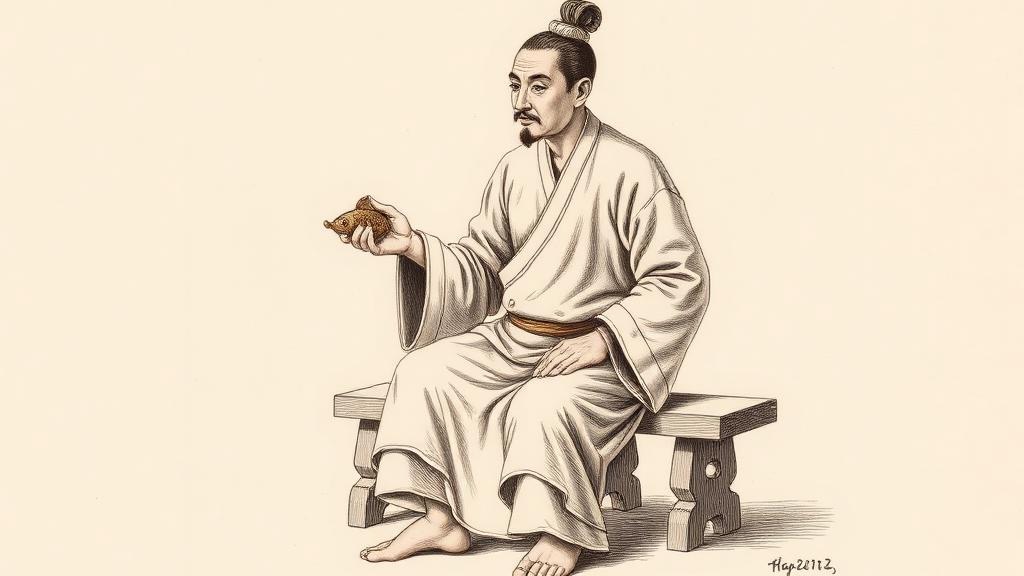
By the Eastern Han dynasty (25–220 CE), these locks had moved from imperial tombs into ordinary commerce. Bronze padlocks with splitting springs were being produced in large numbers across China — on the Silk Road, in market towns, in the holds of river boats. The material of choice was bronze, though wealthier owners commissioned brass or silver. The shape was often an animal: a fish, a tiger, a dragon, each form carrying a quiet wish for protection alongside its mechanical function.
The mechanism was simpler than it looked. A splitting-spring padlock has three parts: a case, a bolt, and a key. The bolt carries four thin metal springs, fanned outward from its stem, pressing against the inner walls of the case with just enough tension to hold everything locked. To open it, you insert a tubular key over the stem — the key’s collar squeezes the springs inward, compressing them flat, and the bolt slides free. Remove the key and the springs snap back outward, locking the bolt in place again. No warding, no pin stacks, no wheels. Just metal memory.
What the Roman warded lock — the contemporary Western solution — accomplished through a labyrinth of obstacles, the Chinese barbed-spring lock accomplished through elasticity. Both were bronze, both were portable, both were used to secure goods along trade routes. The mechanisms were entirely independent inventions, and the Chinese spring design turned out to be stubborn in the best possible way: the fundamental structure remained in production for roughly 2,000 years without major revision.
The puzzle locks came later. By the Song dynasty (960–1279 CE), Chinese craftsmen were building padlocks that demanded not just the right key but the right sequence: slide a plate here, rotate an ornament there, then insert the key. You could hand a man the correct key and he still could not open the lock. These eventually became prized objects among scholars and officials — intellectual toys as much as security devices, passed around at gatherings the way a difficult riddle might be.
A design good enough to last two thousand years is not easily improved upon. The springs that held closed the merchants’ goods along the Silk Road are still holding closed, in principle, the shackle of every brass padlock you can buy today.
Sources
- Padlock — Wikipedia — Chinese padlocks since the Eastern Han dynasty, earliest barbed-spring lock from the Qin Mausoleum site (more than 2,200 years old), materials and mechanism overview.
- Structural analysis of traditional Chinese complex puzzle locks — PMC / Scientific Reports — How the barbed-spring mechanism works (key squeezes springs inward to release bolt), puzzle lock evolution and the four main types, use as scholarly pastime.
- Ancient Chinese Locks: History, Mechanisms, and Cultural Significance — ablokc.com — Han dynasty spring-and-bolt innovations, animal-form designs and their symbolic context, puzzle locks as literati objects.